Role of a Montessori Teacher
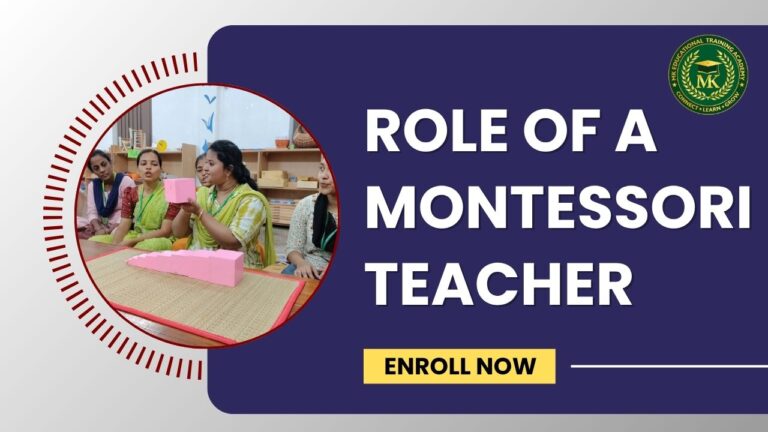
Montessori education encourages children to learn via exploration, practical activities, & independent discovery. Montessori teachers play an important role by coaching the children, monitoring their needs, and creating an understanding learning environment.
In this blog we will discover the role of a Montessori teacher, understand the Montessori teacher’s meaning, discuss their key responsibilities and skills, and see why choosing the right Montessori teacher training, like MK Educational Training Academy, can help build a successful teaching career.
Who Is a Montessori Teacher?
The Montessori teacher is more than simply teaching academic subjects. A Montessori teacher is a facilitator who understands each child’s interests, abilities, & developmental needs.
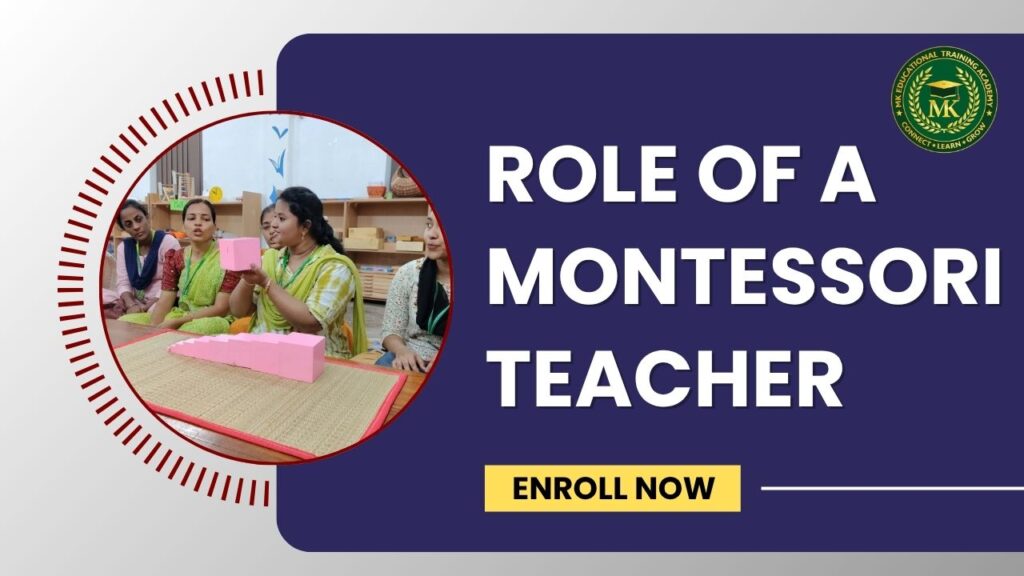
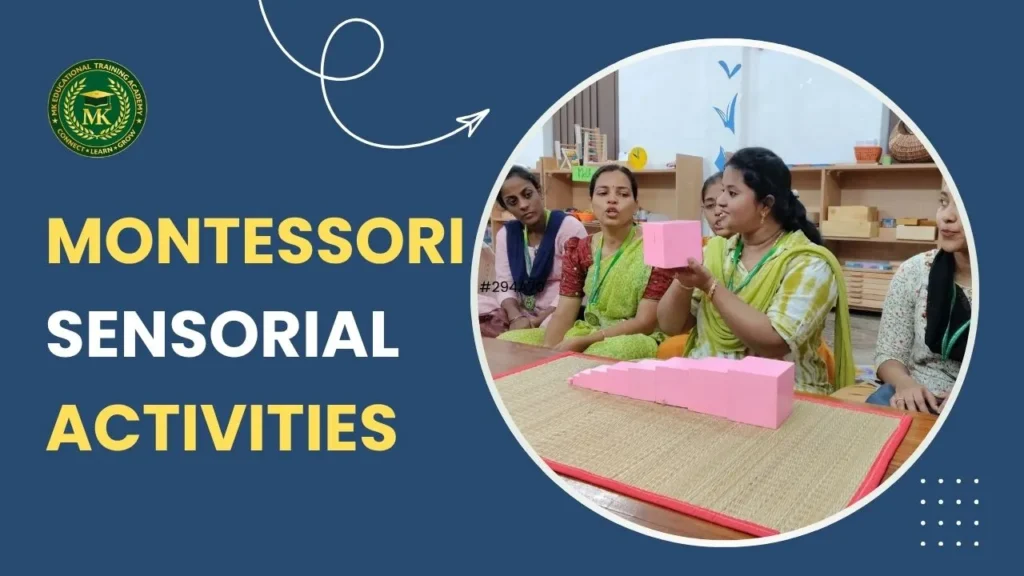
Montessori teacher explains suitable Montessori materials, explains how to use them, and allows younger ones to practice on their own. This method helps to develop concentration, responsibility, confidence, and love for learning.
Why Are Montessori Materials Important?
The Montessori method places considerable importance on the prepared environment. The materials within that environment should be accessible, attractive, orderly, purposeful, and appropriate for the child’s developmental stage.
Montessori materials help to transform abstract ideas into concrete experiences. For instance, rather than explaining mathematical quantities verbally, a child can physically work with beads, number rods, or other mathematical materials.
This type of Montessori approach helps the child to see, move, touch, compare, & experience the concepts step by step before moving toward more abstract understanding.
What Is the Role of a Montessori Teacher?
The role of Montessori teacher requires several important responsibilities that foster in creating an environment that supports children’s overall development.
Preparing the Montessori Classroom
A Montessori teacher prepares the classroom with safe, organised, and engaging materials that are suitable for the children’s age and development. The materials are placed where children can easily access and use them independently.
Observing Children
Observation is one of the most important skills of a Montessori teacher. Rather depending only on traditional tests, the teacher monitors how children work, communicate, solve problems, & respond to activities.
These observations help the teacher to understand when to introduce a new lesson, provide additional guidance, or allow the kids more time for practicing by themselves.
Guiding Instead of Controlling
A Montessori teacher does not constantly instruct or interrupt children. After demonstrating an activity, the teacher gives children the freedom to explore within appropriate boundaries.
This balance between independence and guidance motivates the children to make decisions, solve problems, and develop self control.
Developing Social and Life Skills
The role of Montessori teacher also includes helping the children to develop practical and social skills. Teachers acts as a role model by showing kindness, cooperation, patience, respect, and responsibility. They help younger ones to learn to care for their surroundings and develop good relationships with others.
Why Choose MK Educational Training Academy?
Candidates who want to become Montessori teachers need both practical skills and good understanding of Montessori principles. MK Educational Training Academy in Chennai provides a Montessori teacher training program that combines theory with practical classroom experience. This academy facilitates both online and offline courses, along with expert guidance, practical learning, and international certification programs.
The academy also highlights more than 20 years of experience in the education sector, training for over 1,000 aspiring educators, multiple Montessori related courses, & placement support.
Frequently Asked Questions
A Montessori teacher prepares the classroom, observes children, introduces learning activities, provides guidance, and encourages independent learning.
The Montessori teacher refers to an educator who acts as a guide and facilitator, helping children to discover and develop skills on their own.
Patience, observation, communication, empathy, classroom management, and knowledge of Montessori teaching methods are necessary skills.
Conclusion:
The role of Montessori teacher is to create an environment where children can learn confidently, independently, and joyfully. Montessori teachers support academic, social, emotional, and practical development through observing, guiding, & motivating the children instead of simply instructing them.
For aspiring educators, MK Educational Training Academy offers structured Montessori training with practical learning and flexible study options to help build the skills needed for a successful teaching career.