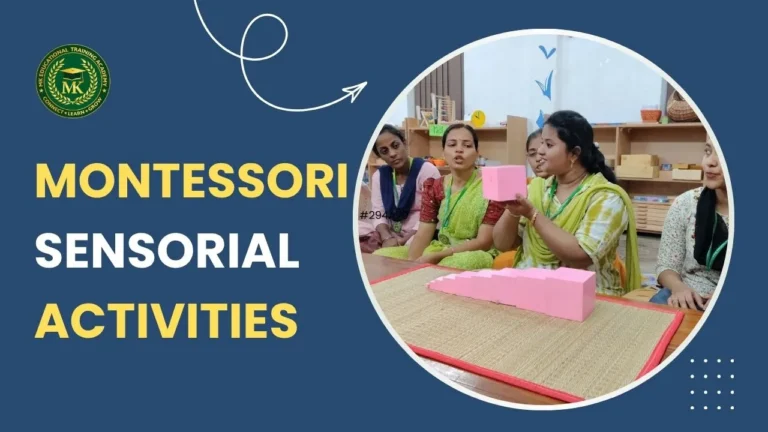
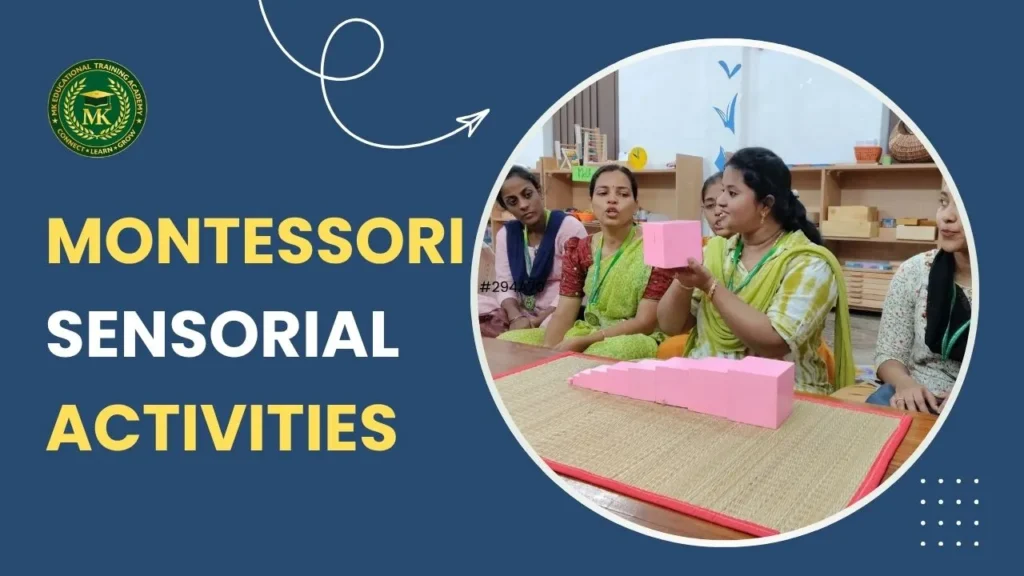
Montessori Sensorial Activities

Children learn through observation, exploration, and hands-on experiences. In Montessori education, Montessori sensorial activities provide structured opportunities for children to explore their environment and understand differences in colour, shape, size, texture, sound, weight, smell, and taste.

For Montessori teachers and aspiring educators, understanding these activities is important. Proper knowledge helps the teachers to present the materials proficiently, monitor children’s responses, & create meaningful learning experiences.

What Are Montessori Sensorial Activities?

Montessori sensorial activities are practical exercises which are curated to help younger ones to identify, compare, & classify sensory information.

The sensorial meaning in Montessori education exceeds simply using the senses. These activities help the kids to refine their ability to identify the similarities and differences.

For instance, children may arrange objects according to size, match colours, identify different textures, or listen carefully to distinguish between sounds.

For teachers, understanding the purpose behind every activity is important. The objective is not simply to keep children occupied but to support concentration, observation, classification, coordination, and independent learning.

Why Are Sensorial Activities Important in Montessori Teaching?

Sensorial activities play an important role in creating an engaging, purposeful, and child-centred Montessori learning environment. They help teachers support children with different interests, abilities, and developmental levels while allowing each child to learn at their own pace.

Through sensorial activities, teachers can:

● Encourage concentration and sustained attention
● Create a meaningful and engaging hands-on learning experiences
● Support children at different developmental stages
● Provide clear presentations followed by opportunities for independent practice
● Build confidence, coordination, and Initiative Learning
● Select appropriate Montessori materials based on each child’s learning needs
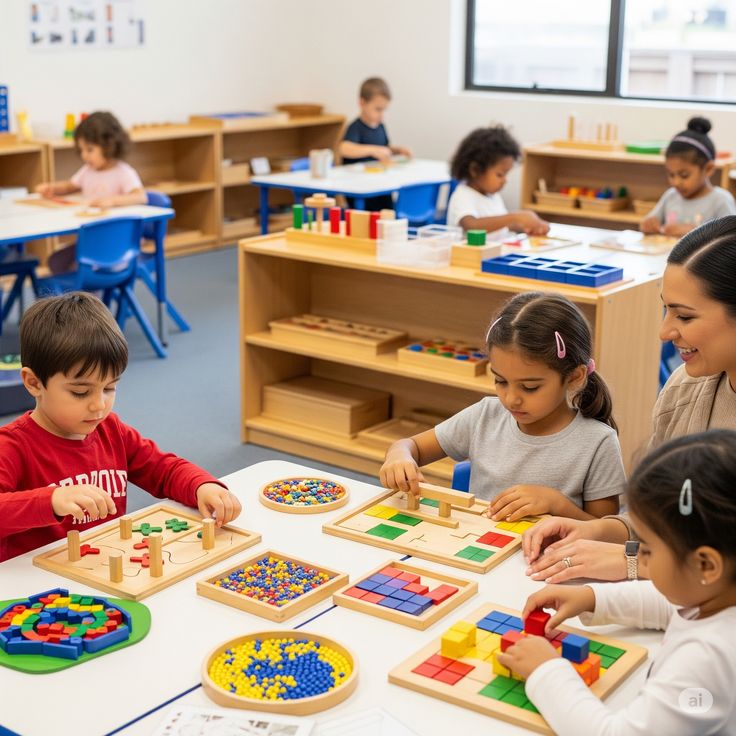
sensorial activity in montessori classroom
Through repetition, careful observation, and purposeful guidance, teachers can understand the younger mind’s individual learning needs and provide suitable activities that encourage interaction, development, and independent learning.

The Five Senses Montessori Approach

The five senses of Montessori approach concentrates on sight, touch, hearing, smell, & taste. Montessori educators learn how to use activities linked to these senses to enhance children’s sensory awareness.

Visual and Tactile Activities

Visual activities help children differentiate colour, shape, size, length, and dimension. Materials such as the Pink Tower, Brown Stair, Red Rods, and Colour Tablets generate opportunities for comparison and classification.
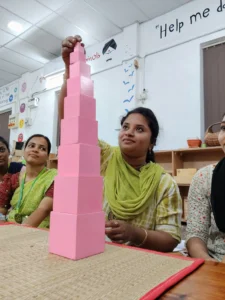
Future of Montessori Teacher Training, montessori lab, montessori sensorial activities

Tactile activities allow children to identify differences between rough and smooth, hard and soft, and other textures.

Auditory Sense in Montessori

The auditory sense in Montessori is developed through activities that encourage children to listen carefully and distinguish between sounds.

Sound cylinders and bells can help children develop:

  • Listening skills
  • Concentration
  • Memory
  • Sound discrimination
  • Attention to detail


Teachers need to understand how to present these activities clearly and allow children sufficient time for independent exploration.

Smell and Taste Activities

Olfactory activities can involve matching familiar scents includes vanilla, lemon, or herbs. Gustatory activities may introduce basic tastes such as sweet, sour, salty, and bitter under appropriate supervision and safety conditions.

Understanding Montessori Materials:

A Montessori material is a purposeful educational tool curated to support specific developmental concept or skill.

Montessori materials are generally designed to encourage:

  • Hands-on learning
  • Concentration
  • Independence
  • Repetition
  • Coordination
  • Self-correction


During Montessori teacher training, educators learn how to introduce materials, demonstrate activities, monitor the children, & recognize the purpose beyond every material.

The Role of Montessori Teacher Training:

While Montessori theory provides the foundation, teachers need practical skills to apply it successfully.

Montessori teacher training prepares the educators with an understanding of Montessori philosophy,child development, classroom practices, sensorial activities, and the appropriate presentation of Montessori materials. 
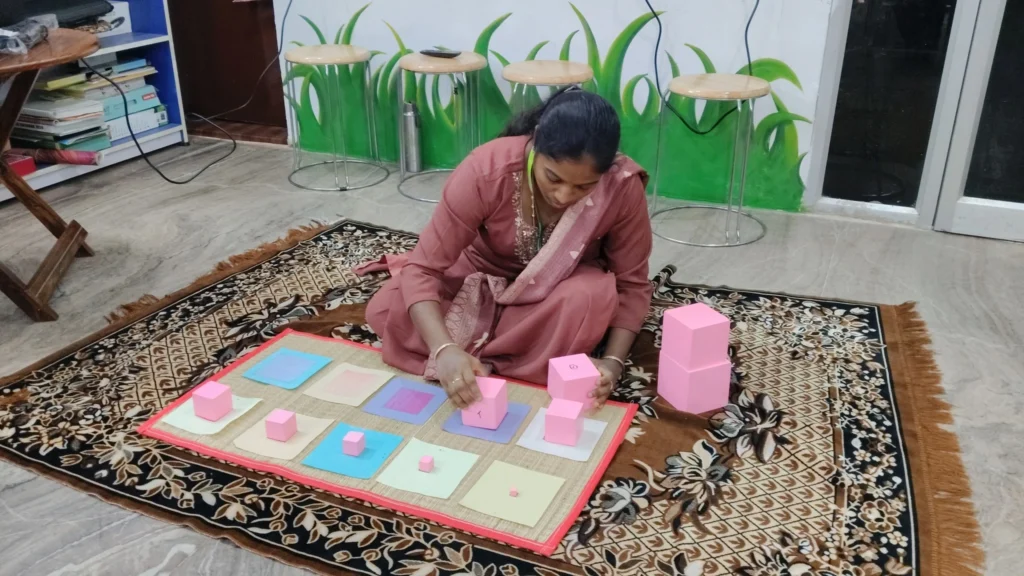
Future of Montessori Teacher Training, montessori lab facilities, Montessori sensorial activities

Training can help aspiring teachers develop confidence in:

  • Preparing the learning environment
  • Presenting Montessori activities
  • Observing children’s behaviour
  • Supporting independent learning
  • Selecting age-appropriate activities
  • Using Montessori materials effectively


For teachers who want to improve their Montessori knowledge or begin a career in Montessori education, Guided training can provide a valuable foundation.

How MK Educational Can Support Montessori Educators ?

Selecting the right Montessori training program is an important step for aspiring Montessori educators.

MK Educational can be a practical choice for learners looking to develop their understanding of Montessori education and teaching practices.

A strong training programme should combine Montessori philosophy with practical learning, helping educators to understand not only what to teach but also how and why particular activity supports child development.

Frequently Asked Questions

They are experimental activities created to help children refine their senses and compare qualities such as colour, texture, shape, size, sound, and weight.

They help the teachers to provide engaged learning experiences that develop children's observation, concentration, coordination, and sensory recognition.

The five senses cover sight, touch, hearing, smell, and taste. Montessori education also provides activities that refine other sensory experiences, such as weight and temperature.

It refers to activities that help kids to listen carefully, differentiate between sounds, and develop auditory discrimination and concentration.

Montessori teacher training helps educators understand Montessori philosophy, child development, classroom methods, sensorial activities, and the appropriate use of Montessori materials.

Conclusion:

Montessori sensorial activities are an important part in Montessori education because they allow children to learn through direct experience. Teachers need to understand both the purpose and appropriate presentation of these activities to effectively foster a purposeful, child centred learning environment.

Learning about Montessori materials and the five senses can help the educators to develop more practical teaching practices.

For aspiring and practising Montessori educators, Montessori teacher training can provide the knowledge and practical skills needed to apply these principles confidently. Exploring training opportunities with MK Educational can be a valuable step towards strengthening Montessori teaching skills and building a rewarding career in Montessori education.

Latest Posts

Enroll Now to Join the Course

Categories

Copyright © 2026. All rights reserved. Powered by Brandstep Corp