10 Qualities of a Montessori Teacher
A Montessori teacher plays a very important role in a child’s learning journey. Compared to traditional teaching methods, Montessori education focuses on creativity, independence, and experimental learning. A Montessori teacher guides younger ones and helps them learn at their own flow.
In this blog, we will look at the 10 qualities of a Montessori teacher and understand why these skills are important in a Montessori classroom.
What is a Montessori Teacher?
A Montessori teacher is a trained educator who follows the Montessori method introduced by Dr. Maria Montessori. Rather than giving instructions, the teacher monitors, supports, and promotes younger minds to explore and learn clearly.
The primary focus of a Montessori teacher is to create a calm, positive, and child-friendly learning environment.
1. Patience:
One of the most important qualities of a Montessori teacher is patience. Every child learns in a different manner. Some children learn fast, whereas others take more time to understand.
A Montessori teacher creates a peaceful environment and allows children the freedom to learn without pressure.
Why Patience Matters
- Helps children feel comfortable
- Encourages independent learning
- Builds confidence in students
2. Good Observation Skills:
A Montessori teacher carefully watches children to understand their interests, strengths, and challenges.
Instead of disturbing, the teacher observes quietly and provides help only when needed.
Benefits of Observation
- Identifies learning needs
- Helps teachers guide students better
- Supports personalized learning
3. Love for Children:
A caring attitude is one of the main characteristics of a Montessori teacher. Children learn the best way, when they feel safe, respected, and valued.
Montessori teachers encourage every child with friendliness and understanding.
How It Helps Children
- Creates emotional security
- Improves communication
- Builds trust between teacher and child
4. Creativity:
Creativity is another important Montessori teacher quality. Montessori classrooms use activities, games, stories, & practical materials to make learning more fun and enjoyable.
Creative teachers help children to stay curious and active.
Examples of Creative Teaching
- Storytelling
- Art and craft activities
- Practical learning exercises
5. Strong Communication Skills:
Montessori teachers should communicate clearly with children and parents. Using simple words and gentle tone helps the children to understand instructions easily and effectively.
Good communication also helps build strong relationships with families.
Important Communication Skills
- Listening carefully
- Speaking politely
- Giving clear guidance
6. Respect for Every Child:
Respect is one of the biggest qualities of a Montessori teacher. Montessori teachers allow children to make their choices and learn on their own.
Montessori Teachers do not force children to learn in the same flow or at the same speed.
Why Respect is Important
- Builds confidence
- Encourages responsibility
- Supports independent thinking
7. Calm and Positive Attitude:
The Montessori classroom should feel comfortable and encouraging. The Montessori teacher stays calm even during difficult situations.
Children often learn emotional behavior from adults, so teachers with a positive attitude help build a positive environment.
Benefits of a Calm Teacher
- Reduces stress in the classroom
- Helps children focus better
- Encourages discipline naturally
8. Flexibility:
Every kid learns in their own style. Montessori teachers must be flexible and ready to change the teaching methods when needed.
This flexibility helps children learn comfortably.
Flexible Teaching Includes
- Adjusting activities
- Giving individual attention
- Allowing self-paced learning
9. Passion for Learning:
One of the best characteristics of a Montessori teacher is the passion for learning. Great teachers regularly improve their teaching skills and learn new montessori methods.
They stay updated with child development and educational practices.
Continuous Learning Helps Teachers
- Improve classroom methods
- Understand children better
- Become more confident educators
10. Ability to Guide Instead of Control:
In Montessori education, teachers support the children rather than controlling them. They motivate younger minds to solve problems, think of new ideas, and learn on their own.
This guidance helps children to become confident and responsible learners.
Role of Guidance in Montessori Education
- Promotes self-learning
- Develops decision-making skills
- Encourages creativity and confidence
Frequently Asked Questions
The main qualities of a Montessori teacher include patience, observation skills, creativity, kindness, flexibility, and strong communication.
Montessori teachers act as guides instead of only giving instructions. They encourage independent and hands-on learning.
The role of a Montessori teacher is to guide children, observe their learning needs, and create a supportive learning environment.
Patience allows children to learn at their own pace and helps create a stress-free learning atmosphere.
Conclusion:
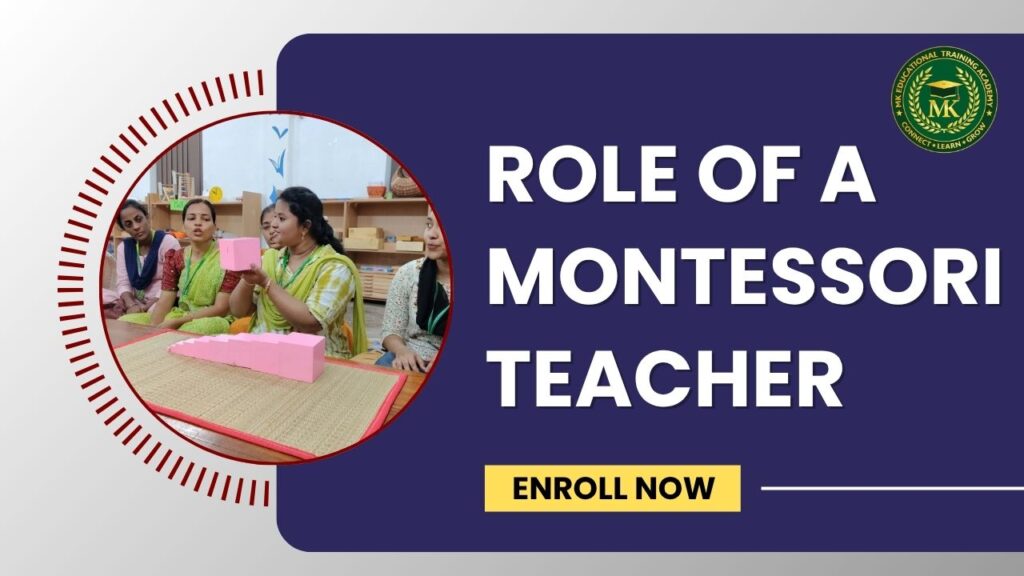
The role of a Montessori teacher is much more than just classroom teaching. A good Montessori teacher inspires children, supports independence, and creates a joyful learning environment.
The most important qualities and characteristics of a Montessori teacher include patience, creativity, observation skills, kindness, flexibility, and respect for every child. These qualities help children grow emotionally, socially, and academically.
If you want to become a successful Montessori teacher, developing these skills can help you create a positive difference on young learners.
To Become a Certified Montessori Teacher Enroll at MK Educational Training Academy.