Complete Guide to Montessori Materials for Montessori Teachers
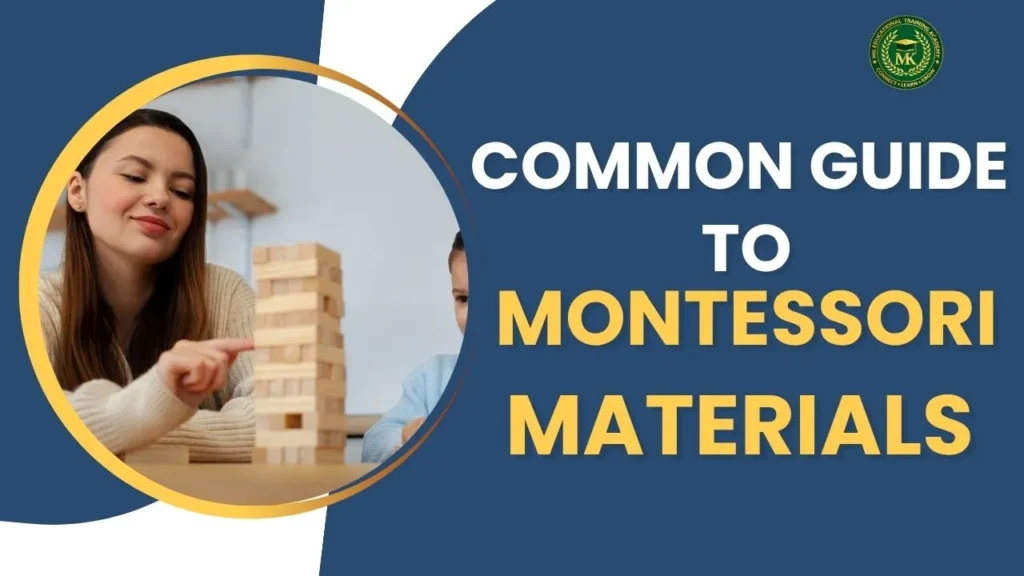
Montessori education is built around a carefully prepared learning environment where kids learn through exploration, movement, observation, and practical experiences. Montessori materials are an important part of the classroom. They help the children to learn independently and develop skills particularly in concentration, coordination, problem-solving, language, mathematics, and everyday life skills.
For a Montessori teacher, to understand the purpose and correct presentation of each material is essential. Knowing the names of Montessori materials is only the beginning. A trained teacher must also understand when to introduce a material, present the activity, how to monitor the child, and how to recognize when the child is ready to progress to the next activity.
In this blog we explain the major materials in a Montessori classroom, their purposes, categories, and how Montessori teachers can use them effectively.
What Are Montessori Materials?
Montessori materials are specially designed learning tools that help children learn through touch, sight, and hands-on activities. Unlike traditional classroom materials that mainly explain concepts, Montessori materials encourage children to explore, discover, and understand ideas on their own through their senses and actions.
Many Montessori materials have a particular purpose and are introduced to each child or small group presentations. Children are encouraged to work with the material independently after the teacher demonstrates its correct use.
A good Montessori material generally encourages:
- Experimental learning
- Independent exploration
- Concentration
- Repetition
- Coordination
- Self-correction
- Logical thinking
- Problem-solving
- Independence
The teacher’s role is not simply to provide materials. The teacher carefully prepares the environment, observes each child, and presents materials according to the child’s developmental needs.
Why Are Montessori Materials Important?
The Montessori method places considerable importance on the prepared environment. The materials within that environment should be accessible, attractive, orderly, purposeful, and appropriate for the child’s developmental stage.
Montessori materials help to transform abstract ideas into concrete experiences. For instance, rather than explaining mathematical quantities verbally, a child can physically work with beads, number rods, or other mathematical materials.
This type of Montessori approach helps the child to see, move, touch, compare, & experience the concepts step by step before moving toward more abstract understanding.
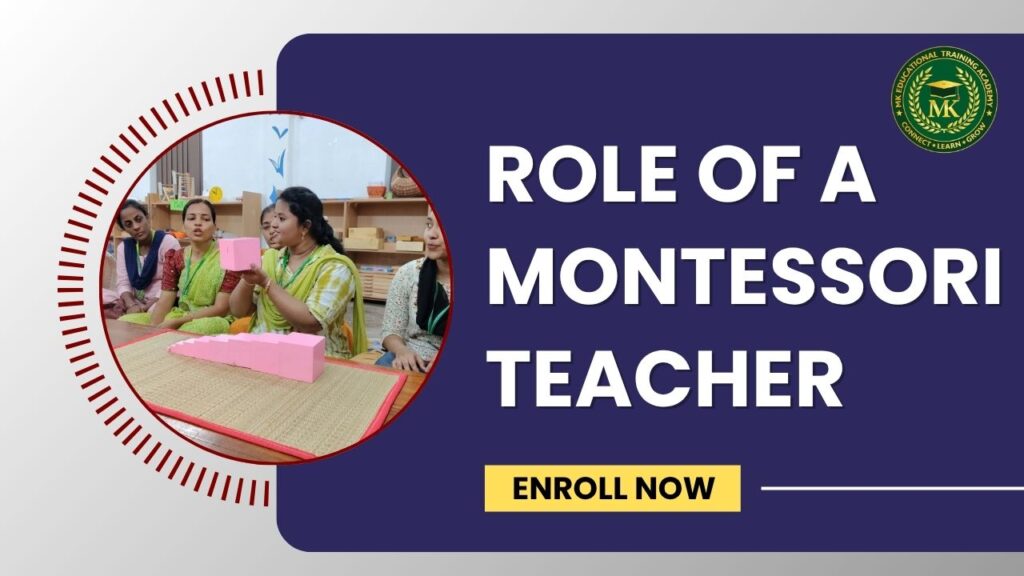
The Role of the Montessori Teacher
A Montessori teacher should understand that the material itself is not the complete lesson. The teacher’s presentation, timing, observation, & classroom preparation are equally important.
A teacher should know:
- The name and purpose of each material
- The appropriate age or developmental stage for presentation
- How to present the material
- How to invite the child to work independently
- How to observe the child’s response
- How to identify readiness for the next material
- How to maintain and organize the classroom materials
Main Materials in a Montessori Classroom
The materials in Montessori classroom environments are generally divided into several important areas.
Practical Life Materials
Practical Life activities help children develop independence, concentration, coordination, and everyday skills. Common materials include pouring activities, spooning, transferring, dressing frames, buttoning, zipping, washing, polishing, and folding activities.
These Montessori tools help the children to develop fine-motor skills while learning how to perform focused tasks independently.
Sensorial Materials
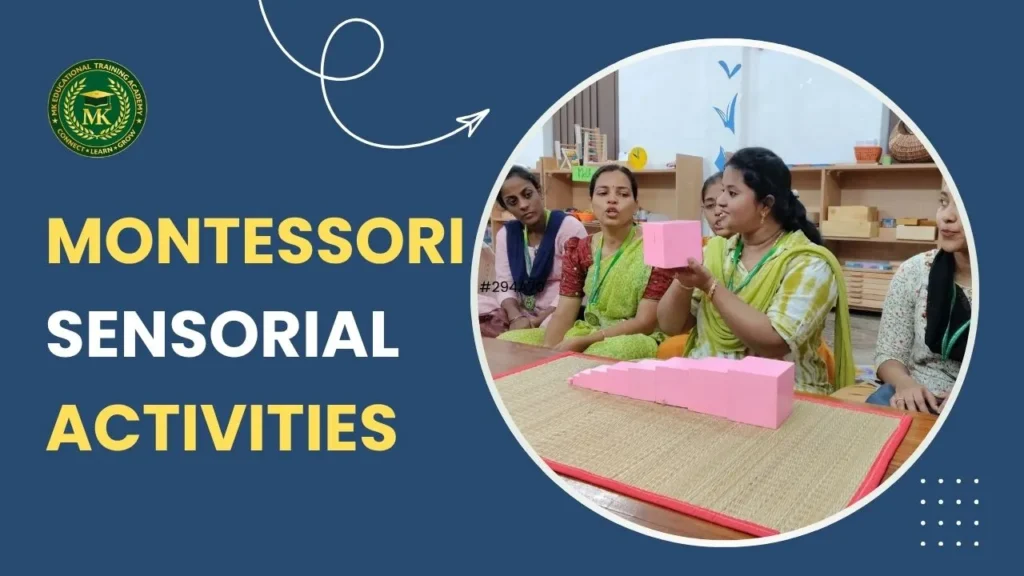
Sensorial materials help the younger minds to improve their senses and understand how to compare, group, and monitor different qualities.
Some well known examples include:
- Pink Tower
- Brown Stair
- Red Rods
- Knobbed Cylinders
- Colour Tablets
- Geometric Cabinet
- Sound Cylinders
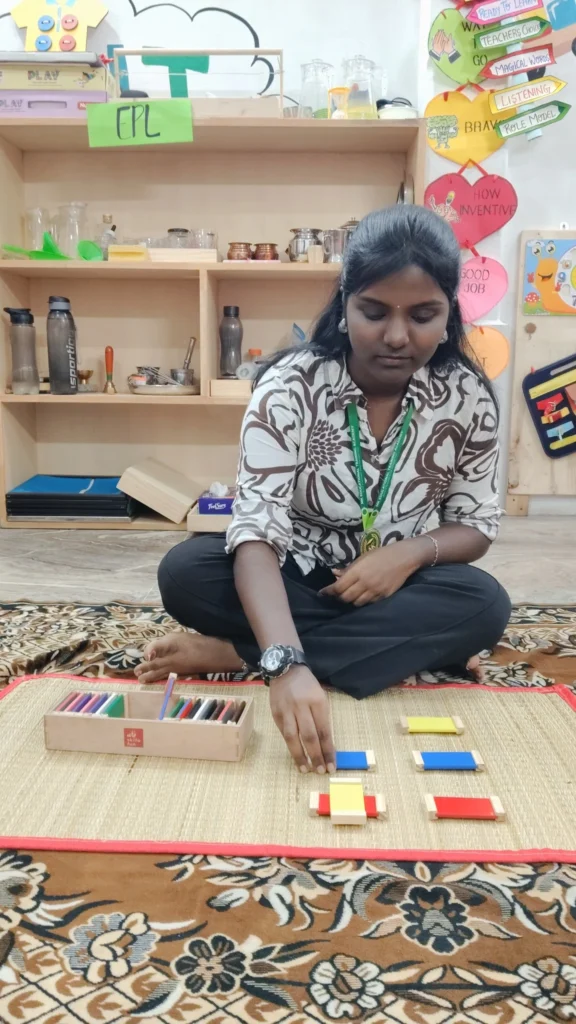
These materials provide concrete experiences of size, shape, colour, texture, sound, and dimension.
Montessori Language Materials
Montessori language materials support children’s development in listening, speaking, reading, writing, and phonetic awareness.
Important examples include:
- Sandpaper Letters
- Moveable Alphabet
- Metal Insets
- Picture and object cards
- Reading cards
- Word and sentence cards
Sandpaper Letters connect sounds with symbols, while the Moveable Alphabet helps children form words before they become fully confident writers.
Montessori Mathematics Materials
Montessori mathematics materials make mathematical concepts concrete and understandable. Common examples include Number Rods, Sandpaper Numerals, Golden Bead Material, Hundred Board, Bead Chains, Spindle Box, Number Cards and Counters, & Stamp Game.
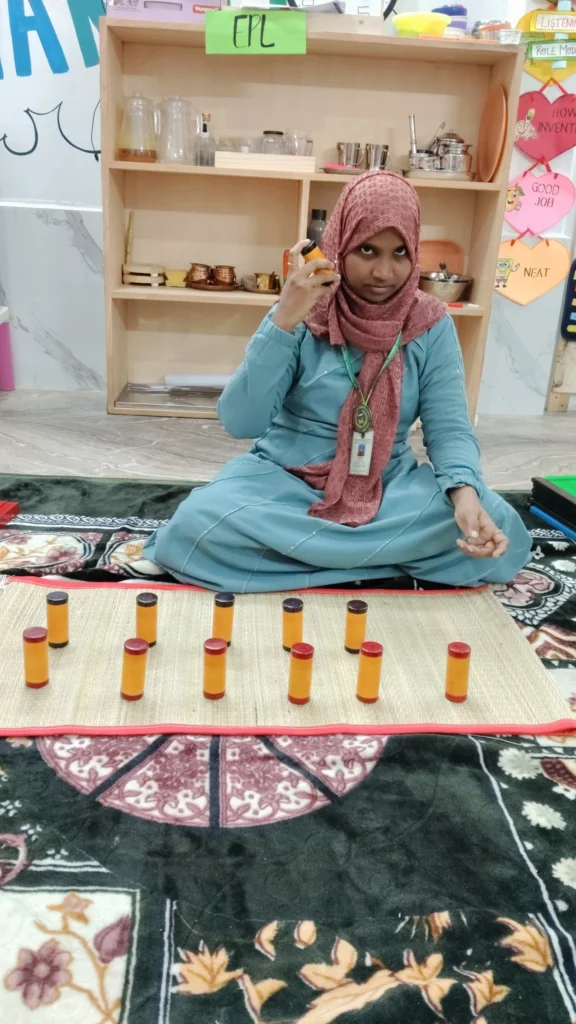
These materials help children understand quantity, numbers, counting, place value, operations, and mathematical relationships.
Montessori Classroom Supplies
Along with educational materials, teachers need suitable Montessori classroom supplies. These may include child sized tables and chairs, open shelves, trays, baskets, work mats, storage containers, art supplies, books, and Practical Life equipment.
A well organized classroom allows children to select materials, complete activities, and return them independently.
Why Montessori Teachers Need Proper Training ?
Effective Montessori teaching involves much more than memorizing the names of Montessori materials. Teachers need to learn how to explain the materials, pay attention to the kids, maintain a prepared environment, & introduce activities based on the child’s developmental needs.
This is why professional Montessori teacher training is valuable for aspiring educators.
Why Choose MK Educational Training Academy for Montessori Teacher Training?
Choosing the right training academy can help the future Montessori teachers to develop both theoretical knowledge and practical classroom understanding. MK Educational Training Academy in Chennai focuses on helping aspiring educators understand Montessori principles, classroom practices, child development, and the use of Montessori materials.
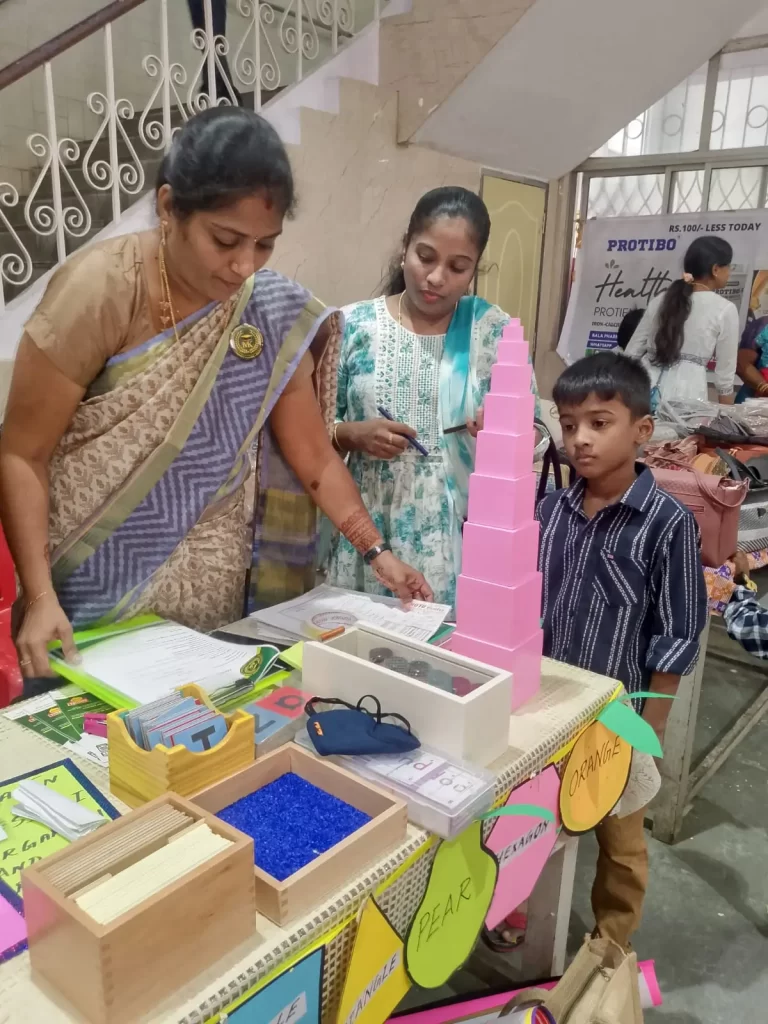
A strong teacher-training programme can help educators become more confident in preparing classrooms and guiding children through learning experiences.
Frequently Asked Questions
Montessori materials are hands-on educational resources designed to support children's independent learning and development.
The major categories include Practical Life, Sensorial, Language, Mathematics, and Cultural materials.
They include resources such as Sandpaper Letters, Moveable Alphabet, Metal Insets, picture cards, and reading materials.
They help teachers provide purposeful activities and support children's independence, concentration, coordination, and understanding.
Conclusion:
Montessori materials are an important part of a prepared Montessori environment. For teachers, understanding the purpose, presentation, and proper use of these materials is necessary for creating purposeful and child-focused learning experiences.
If you want to develop your Montessori teaching skills through practical Montessori classroom experience, consider joining MK Educational Training Academy. This training can help you to gain a better understanding of Montessori materials, classroom practices, and how to confidently apply Montessori methods in a real classroom environment.
Enroll in MK Educational Training Academy and take the next step toward becoming a confident and well-prepared Montessori teacher.