Montessori classroom ideas
1) Practical Life:
Practical Life activities in Montessori classrooms engage all five senses including sight, touch, hearing, smell, and taste via everyday tasks like pouring, sorting, or preparing food. These activities help children to develop hand eye coordination, and concentration while making learning concrete and purposeful.
By involving the senses, kids gain a strong understanding of their environment, build independence, and enhance mental and sensory awareness.
2) Sensorial:
Sensorial activities in Montessori classrooms help kids learn through five senses using practical materials like color tablets, textured objects, and sound cylinders. These activities allow children to compare, observe, and classify sensory information, enhance their observation and attention to detail.
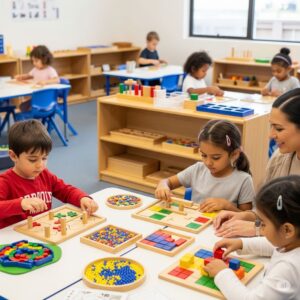
By engaging the senses, younger ones build concentration, critical thinking, and problem-solving skills, establishing the base for academic learning and a deeper understanding of the world around them.
3) Language:
Language activities in Montessori classrooms allow children to interact with letters,sounds, and words more real. Using tools like sandpaper letters, sound boxes, and matching games, children trace, hear, and handle letters to connect symbols with sounds.
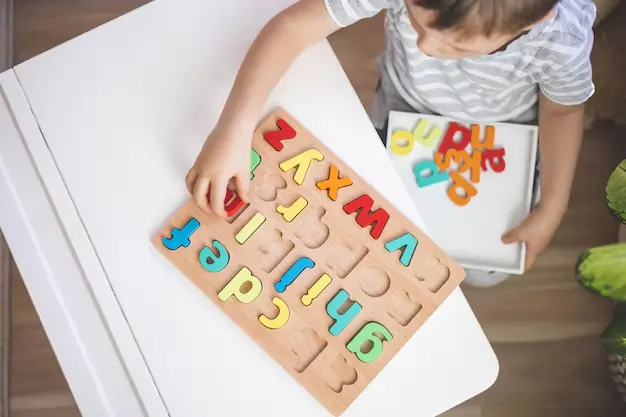
This hands-on approach strengthens vocabulary, sound based awareness, and reading readiness while nurturing concentration, memory, and strong understanding of language concepts.
4) Mathematics:
Mathematics activities in Montessori classrooms engage the kid’s senses including touch, hearing, and sight, using practical tools like number rods, beads, and counting boards. Children see and feel numbers, understand the patterns, and absorb mathematical concepts via physical, and practical ways.
This approach builds problem-solving skills, logical thinking, and confidence, while making math subjects fun and easy to understand. Sense based learning encourages independence, focus, and love for numbers from an early age.
5) Cultural:
Cultural activities in Montessori classrooms involve kids to discover the world around them, from geography and nature to traditions and cultures. Children connect with multiple ideas in concrete, experimental way, by seeing maps, handling artifacts, listening to music, and experiencing different textures and tastes.

This approach nurtures awareness, curiosity, and respect for people, places, and the environment, while improving observation, critical thinking, and strong understanding of the world.