Practical Montessori Activities for Teachers and Kids
1) Pouring and Scooping:
Pouring and scooping are experimental Montessori activities where kids transfer materials like water, rice, beans, or sand from one container to another using cups, spoons, or small jugs. This activity helps to develop fine motor skills, hand and eye team work, and concentration while teaching accuracy, control, and independence.
These practical task exercises teach patience and care in handling objects.
2) Gluing Paper:
Gluing paper is a Montessori Practical Life activity, that helps the kid to develop fine motor skills, concentration, and hand–eye skills. This activity is carried out using simple Montessori apparatus like a tray, glue container, glue brush, paper pieces, and a base sheet.
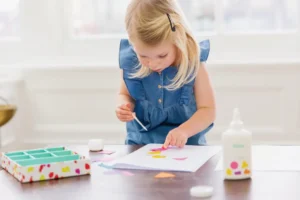
The child is shown how to apply a small amount of glue to the paper and paste it neatly onto the base paper. After completing the work, the child cleans and returns the apparatus, promoting independence and care of the environment.
3) Spoon Transfer:
Spoon transfer is one of the Practical Life activities commonly used in Montessori classrooms to develop concentration, and control of movement. Using Montessori apparatus like a tray, two bowls, a spoon, and transfer materials (grains or beads), the child is shown how to scoop items carefully from one bowl to another.
This activity is executed carefully and accurately that motivates self reliance, neatness, and physical coordination.
4) Dressing Frame:
Dressing frame activities are one of the practical Montessori games that help children learn how to dress themselves and develop hand skills. Using frames with buttons, zippers, snaps, or laces, the child practices opening and closing them. The activity is done slowly and carefully, helping children build independence, coordination, and confidence to carry everyday’s self care tasks.
5) Cleaning Activities:
Cleaning activities are also a part of Montessori activities that teach children to take responsibility and care for their environment. Using tools like small brooms, dustpans, cloths, and brushes, the child practices wiping, sweeping, or dusting surfaces.
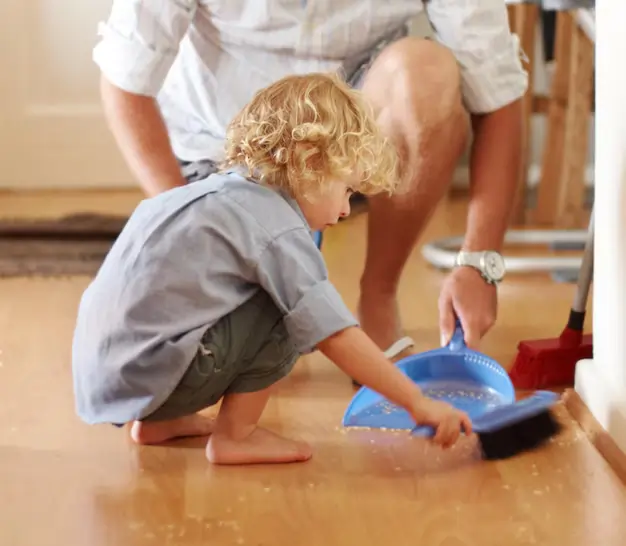
The activity is done carefully and attentively, developing orderliness, concentration, and coordination.
6) Tong Transfer:
Tong transfer activities in the Montessori method of teaching materials help children strengthen their hand muscles and improve accuracy. Using small tongs, bowls, and objects like beads or beans, the child moves items from one container to another. This activity is done carefully and purposefully, motivating concentration, self-control, and hand skills.
7) Folding Activities:
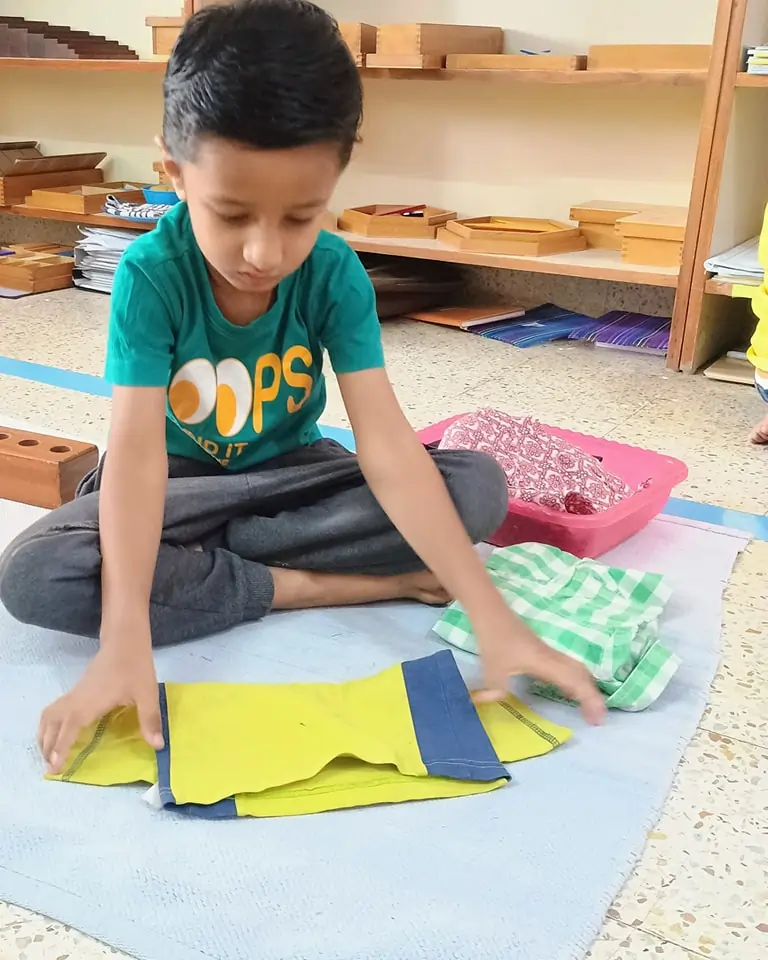
Folding activities are part of Montessori activities, that help younger ones develop concentration, order, and manual control. Using small cloths, napkins, or paper, the child performs folding them neatly on a tray or table.
Source: Facebook
This task is done with care and step by step, promoting attention, precision, and self reliance.
8) Care of Environment Activities:
Care of the Environment activities are part of Montessori activities that teach children to maintain a clean and organized space. Using tools like dusters, small brooms, cloths, or watering cans, children tidy, clean, or arrange objects in the classroom. The activity is done with focus and step by step, promoting responsibility, concentration, and neatness.
9) Care of Self Activities:
Care of the Self activities is a part of practical life Montessori activities which helps children learn to look after themselves independently. Using small tools like combs, brushes, towels, or washbasins, they perform washing, grooming, or dressing. This activity is executed carefully and mindfully, promoting self-reliance, concentration, and personal hygiene.
10) Grace and Courtesy Activities:
Grace and Courtesy activities in Montessori apparatus help children to develop polite behavior and positive social interactions. They learn to greet, share, and speak kindly Through role-playing, gestures, and guided demonstrations. This activity is carried out attentively and carefully, promoting self-discipline, respect, and social skills.