Comparing Montessori and Traditional Method
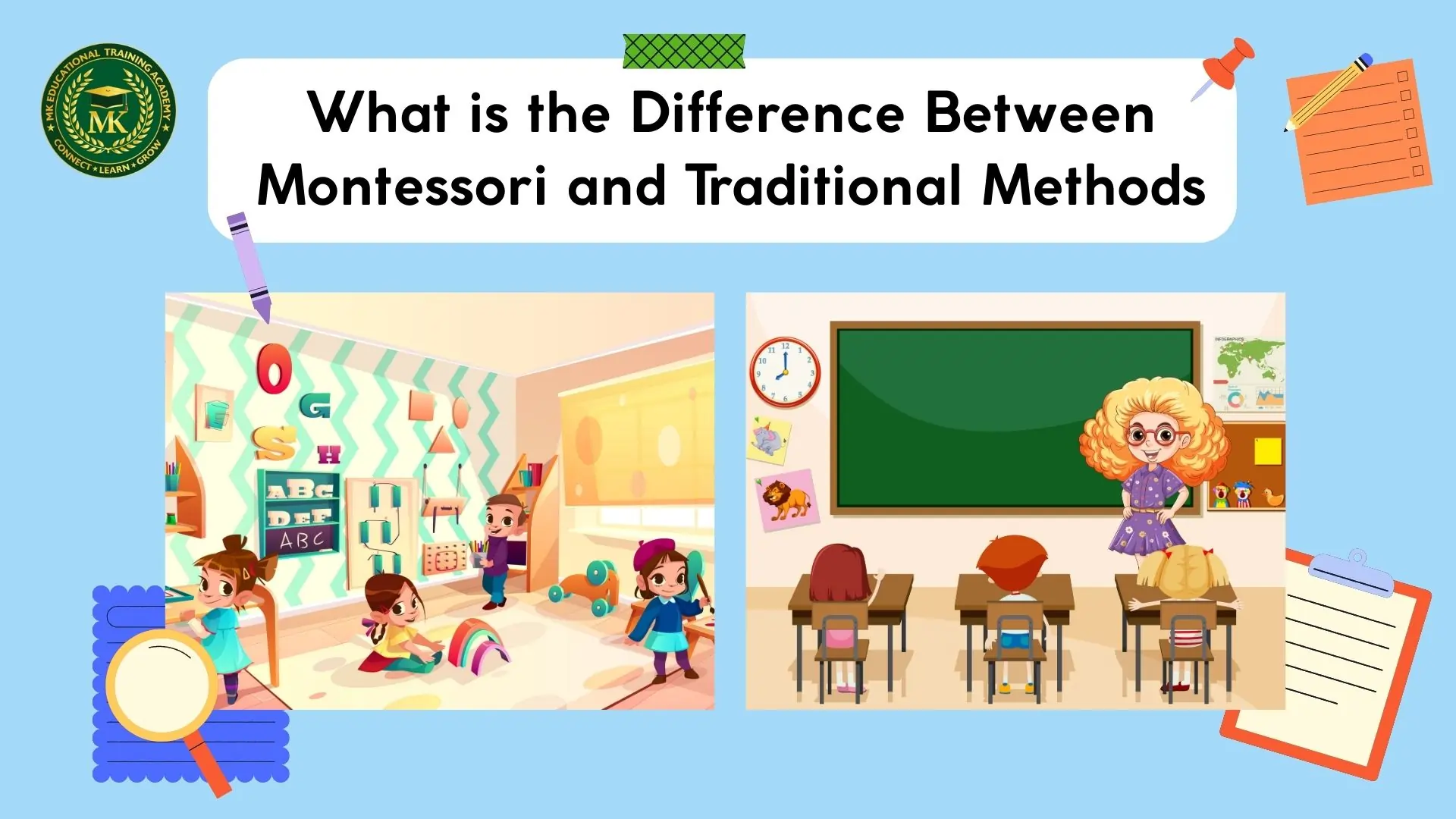
In today’s developing world, everyone is updating to the latest trend and technology. In the same way, it is necessary for the parents and the educators to decide in choosing the right education method for the children. Many parents want their kids to learn the education in an easy way without difficulty and hassle free.
That’s why, in today’s trend, Montessori education is becoming popular among parents. But they might be confused, what is the difference between Montessori and Traditional Method of Education. Both the Methods aim to help children to succeed in different ways. Understanding the differences will help you to decide which approach better suits your children and learning style.
Montessori method encourages independence, self-study learning, and hands-on activities. Children are free to choose, what they want to learn within a prepared environment, and teachers act as guides rather than instructors. Meanwhile, the traditional method follows a fixed curriculum, with the teacher leading the class and students learning the same content at the synchronizing speed. This method often involves grades, tests, and homework, which are usually absent or limited in Montessori classrooms.
In this blog, we will explore the key difference between Traditional and Montessori methods of teaching to help you find out the best approach for your children’s education.
What is Traditional Education ?
Traditional education is an organized format of learning where the teacher leads the class, and students follow a set syllabus. Classes are usually delivered through direct instruction, with a focus on academic achievement and standardized tests. This approach focuses on discipline, regular schedules, and repeated practice, which is commonly found in public and private schools.
Pros of Traditional Education:
- Gives a clear structure and routine for students to follow.
- Addresses primary subjects through a standard curriculum.
Cons of Traditional Education:
- Lacks flexibility to adapt different learning styles
- Focus on memorizing than understanding
- Make students feel stressed because of continuous tests and grades.
What is Montessori Education ?
Montessori education is a student centered approach, where children are free to choose their activities based on their interests. The classroom is carefully arranged with hands-on materials, that support experimental learning and problem solving. Teachers watch and support children as an alternative to giving instructions, allowing each child to acquire knowledge at their own leisure.
Montessori teaching approach helps children make friends, to stay motivated, and learn everyday skills, so they grow with confidence and are able to do things on their own.
Pros of Montessori Education:
- Nurtures children to learn independently and follow their interests.
- Helps on Hands-on Activities which makes learning fun and practical.
- Encourage kids to be confident, creative, and good at finding solutions.
Cons of Montessori Education
- Montessori Education is less widely available than traditional schools.
Montessori Vs Traditional Education:
This table highlights the main differences between Montessori and Traditional education. It helps to compare the teaching styles, learning methods, and classroom setup.
| Aspect | Montessori Education | Traditional Education |
|---|---|---|
| Teaching Style | Teacher guides and observes | Educator leads and gives direct instruction |
| Learning Speed | Children learn at their own tempo | All students follow the same pace |
| Classroom Setup | Open, flexible space with learning materials | Rows of desks facing the teacher |
| Student Role | Learns by doing and making their own choices | Listens quietly and does what the teacher says |
| Teacher’s Role | Supports children while they explore and learn | Acts as the primary teacher and information source |
| Learning Approach | Hands-on activities and exploration | Textbooks, lectures, and memorization |
| Assessment | Based on observation and progress | Regular tests, exams, and grades |
| Discipline | Helps children learn to manage themselves and make decisions | Follows strict rules set by others |
| Group Work | Mixed-age groups, peer learning encouraged | Same-age groups, less peer teaching |
| Focus | Focuses on both school lessons and everyday skills | Primarily academic-focused learning |
Find the Best Montessori Teacher Training Institute:
MK Educational Training Academy, located in Chennai, provides a comprehensive Montessori methodology curriculum that blends both theoretical foundations and hands-on classroom practice. It provides flexible learning formats through online and offline classroom sessions with internationally recognized certifications from World Skills Council, AMI, and the British Learning Centre.
The academy boosts strong placement support and tailored mentorship, creates an user-friendly and internationally recognized choice for aspiring Montessori educators.
Frequently Asked Questions
The best method depends on the child's personality and learning needs. Montessori suits kids who want to grow with independence, while traditional education works well for those who prefer structure and routine.
Teachers in Montessori classrooms support independent learning, meanwhile traditional teachers provide structured lessons and guidance.
Conclusion:
Montessori and traditional methods of teaching are different in how they teach children. Montessori learning encourages kids to learn at their own tempo through hands-on activities, while traditional education often follows a fixed schedule and textbook learning. By knowing the difference between Montessori and Traditional methods can help you choose what is best for your child.
For those who prefer a natural and comfortable way of learning for their kids, Montessori education could be the right choice. To start your journey as a Montessori teacher, MK Educational Training Academy provides trusted Montessori training to help you become a confident Montessori Teacher.